
Interview Summary|Diamond Biofund on Taiwan’s Biotechnology Investment Landscape
發布日期:2025-12-09
原始連結:https://pharmaboardroom.com/interviews/yenchen-huang-head-of-investment-vp-diamond-biofund-taiwan/
PHARMA BOARDROOM|2025.12.09
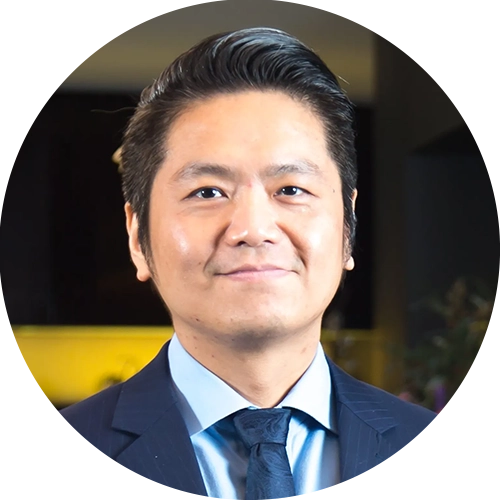
We describe ourselves as “entrepreneurs behind entrepreneurs” – not merely passive capital providers but active partners throughout the journey.
Yenchen Huang – Head of Investment & VP, Diamond Biofund, Taiwan
- How does dual scientific and investment expertise shape investment decisions at Diamond Biofund?
Diamond Biofund’s investment philosophy is grounded in a clear understanding of the long development timelines and high technical barriers intrinsic to biotechnology. Established in 2013 as an evergreen venture capital fund, the firm deliberately avoids fixed fund lifecycles, enabling sustained support from early laboratory research through commercialisation. This structure is particularly suited to biopharma, where clinical development and regulatory pathways often extend well beyond conventional venture timelines.
A background spanning engineering, scientific research, consulting, and advanced training in Boston enables investment decisions to bridge scientific innovation with commercial strategy. This integrated perspective allows for rigorous evaluation of both technical merit and real-world feasibility, positioning Diamond Biofund not merely as a capital provider but as an active partner in company formation and long-term scaling.
- What differentiates scientists who can successfully translate research into investable enterprises?
Strong scientific capability alone is insufficient to build a viable biotechnology company. Considerable time — often six months to a year — is spent engaging with prospective founders to understand their motivations, personal circumstances, and willingness to evolve beyond the laboratory environment.
Successful transitions are typically marked by openness to external perspectives, resilience in the face of prolonged uncertainty, and a genuine readiness to collaborate. Founders who struggle to adapt to the broader demands of enterprise building are unlikely to progress. This selective approach reflects the belief that mutual trust and long-term alignment between investors and founders are essential in navigating the inherent risks and extended timelines of biotech development.
- How can biotechnology’s long-term nature be reconciled with shareholder expectations for returns?
To address the tension between long-term value creation and investor liquidity, Diamond Biofund chose to list publicly in 2023. This move allows a broader base of investors to participate in early-stage biotech exposure while providing liquidity options for existing shareholders.
At the same time, public market listing introduces increased transparency requirements and short-term performance expectations, which can conflict with the extended maturation cycles of biotech assets. Managing this balance remains a central consideration, as the firm continues to align its long-term investment discipline with market-driven accountability.
- What genuinely differentiates Taiwan’s biotechnology landscape from other markets?
Taiwan’s biotechnology ecosystem is distinguished by its high-quality clinical research infrastructure and dense concentration of medical talent. The efficiency of the healthcare system enables rapid validation and iteration of innovative technologies, reducing common bottlenecks seen in other markets.
An additional structural advantage lies in Taiwan’s global leadership in semiconductors and electronics. The convergence of these industries with healthcare creates opportunities for differentiated innovation, particularly in medical devices and diagnostics. However, domestic success alone is insufficient; given Taiwan’s limited market size, global market entry must be an integral component of any scalable biotech strategy.
- How does Taiwan’s geopolitical position influence international licensing and partnerships?
Taiwan’s biotechnology sector remains in a relatively early stage of internationalisation compared to more established ecosystems such as Israel. Limited historical exposure to large-scale global licensing has constrained international visibility, though recent high-value licensing agreements by Taiwanese companies have begun to reshape perceptions.
To bridge this gap, strong emphasis is placed on leveraging international networks, particularly in the United States and Japan, to connect portfolio companies with global pharmaceutical partners. These connections are critical, as early-stage teams often lack the resources or experience to independently navigate complex international business development processes.
- How is capital deployment being approached amid macroeconomic uncertainty and valuation corrections?
Global venture capital activity has become increasingly cautious, with biotechnology IPO markets — particularly in the United States — experiencing significant slowdowns. Fundraising conditions for early-stage companies have consequently become more challenging.
In response, investment activity continues in Taiwan, where capital markets remain comparatively supportive, albeit with heightened selectivity. Internationally, preference is given to more mature companies and experienced management teams. This calibrated approach reflects a shift from aggressive expansion toward disciplined risk management and long-term resilience.
- Where is Diamond Biofund’s future value creation expected to originate?
Future value creation is expected to emerge from two interconnected sources. First, many existing portfolio companies remain in developmental stages, and as key milestones are achieved — including clinical progress, technical validation, or strategic partnerships — valuation uplift is anticipated over the medium to long term.
Second, continued investment in platform technologies with broad applicability remains a strategic priority. Areas of interest include nucleic acid therapeutics, cell and gene therapies, as well as emerging opportunities in anti-aging and metabolic medicine. Rather than pursuing heavily crowded segments, such as certain oncology indications, focus is placed on differentiated domains where competitive intensity is lower and conceptual upside remains substantial.
This dual-track strategy allows value to accrue organically from the current portfolio while simultaneously positioning the fund for future growth through selective exposure to next-generation platforms.
- How should international investors view Taiwan’s biotechnology investment potential?
Taiwan’s most compelling investment proposition lies in the intersection of healthcare innovation and advanced manufacturing. Beyond traditional drug development, the integration of semiconductor capabilities with medical applications enables the creation of technologies that are difficult to replicate elsewhere.
Examples such as advanced medical devices incorporating CMOS sensors illustrate how supply chain depth and clinical sophistication can be combined to accelerate innovation. This convergence positions Taiwan as a distinctive hub for emerging health technologies, offering international investors exposure to differentiated opportunities beyond conventional biotech narratives.